
Exploring the 22-Inch Ottoman: Style and Functionality


Intro
When you think of furniture that combines aesthetics with function, ottomans often come to mind. More specifically, 22-inch high ottomans strike a balance that’s just right for many living spaces. They not only serve as a footrest but can also act as extra seating, accent pieces, or even storage solutions—true multitaskers in the furniture world.
Given their considerable utility, this guide aims to unravel the many layers of understanding surrounding these versatile pieces. From the latest design trends to practical maintenance tips and style integration, this article offers a deeper look at what makes a 22-inch ottoman a worthy choice for homeowners, designers, and decorators alike.
Design Inspiration
Trending Furniture Styles
Ottomans are no longer merely practical additions; they are now integral elements that complement your home’s overall aesthetic. Modern minimalism, rustic charm, and mid-century mod are just a few of the trending styles. 22-inch ottomans fit seamlessly into these decor movements.
- Modern Minimalism: This style favors simplicity and clean lines. An ottoman with a sleek, tufted design can accentuate a minimalist sofa without overwhelming the space.
- Eclectic Boho: In contrast, mix materials like rattan or patchwork fabrics. This creates an inviting atmosphere, ideal for social settings.
- Industrial Chic: Pieces made with distressed leather or metal legs can add character to a loft-style apartment. Think raw edges and rugged textures.
Color Palettes and Combinations
The color of your ottoman plays a significant role in how it blends with your existing décor. According to interior design experts, color psychology is key.
- Neutral Tones: Colors like beige or soft gray can ground a room, providing a versatile base. These hues make it easy to change other decor elements without needing to replace the ottoman.
- Bold Hues: Rich jewel tones, like emerald green or deep navy, can offer a pop of color, serving as an eye-catching focal point.
- Mix and Match: Don’t shy away from patterns! Stripes, geometric shapes, or floral designs can give life to a more subdued setting.
"Choosing the right color palette is like setting the stage for a performance; it can dictate the mood and energy of the entire room."
Practical Advice
Furniture Maintenance Tips
Making an investment in a 22-inch ottoman is worthwhile, but keeping it in top condition requires some attention.
- Regular Cleaning: Depending on fabrics, vacuuming or wiping down with a damp cloth keeps it looking fresh.
- Stain Removal: For spills, blot immediately with a cloth. Avoid rubbing, as that can set the stain. Use specific cleaners for particular materials.
- Avoid Direct Sunlight: UV rays can fade colors over time—consider rotating your ottoman regularly and using curtains to reduce exposure.
- Treatment for Leather: If your ottoman is leather, consider a good conditioner every few months to keep it supple and avoid cracking.
Space Planning Solutions
Understanding how to incorporate your ottoman into a space can enhance usability. Here are a few tips:
- Proximity to Seating: Position your ottoman within arm's reach of seating areas. It should feel like a natural extension, making it easy for people to relax.
- Visual Balance: If you have oversized furniture, such as a large sectional, opt for scaled-down ottomans. Conversely, larger ottomans can provide balance in spacious areas.
- Functionality Zones: Consider ottomans as part of defined spaces. For instance, in a reading nook, an ottoman can serve as both a footrest and a small side table for holding books or drinks.
By recognizing the importance of space planning and maintenance, you foster an environment where your 22-inch ottoman serves its purpose effectively while adding to your home's beauty.
In summary, selecting and incorporating a 22-inch ottoman requires thoughtful consideration of design elements and practical needs. This guide serves to equip you with the necessary insights, ensuring your choice enhances both aesthetic appeal and functionality in your space.
Preface to Ottomans
When it comes to home decor, few pieces of furniture hold as much potential as the ottoman. This unassuming item often wears many hats, functioning as both a style statement and a practical solution. Understanding ottomans, particularly 22-inch high ones, can greatly enhance the aesthetics and functionality of any space, providing homeowners and designers a versatile tool in decorating.
Historical Context
The origins of the ottoman date back centuries. First introduced by the Ottomans in the 16th century, these furniture pieces were originally designed to serve as low tables or soft seats within living areas. Over the years, their utility has not waned, and the ottoman has seamlessly woven its way into various cultures, adapting to changing styles and needs.
In the Victorian era, for instance, ottomans found their way into parlors as the ideal place for resting feet or storing blankets. Fast forward to modern times, and you find that the ottoman’s presence has evolved, often seen as a blend of formality and casual comfort. Today, different styles, materials, and functions have emerged, providing a wealth of options for discerning homeowners who want to incorporate these multipurpose pieces into their spaces.
Definition and Functionality
Defining an ottoman goes beyond its simple existence. An ottoman is a padded seat or small table without a back or arms, commonly used for resting feet. The 22-inch height of these ottomans strikes an ideal balance: it’s low enough to provide comfort but high enough to serve other purposes.
Diving deeper into its functionality reveals a myriad of uses:
- Footrest: The primary role for many. It provides a cozy spot to rest tired feet.
- Coffee Table Substitute: Perfect for smaller living rooms, an ottoman can double as a surface to hold drinks and snacks.
- Extra Seating: An easy way to accommodate guests without compromising space.
Given this range of responses, it’s clear that understanding the ottoman’s versatility is essential when considering home layouts. The right 22-inch ottoman can offer both style and practicality—a rare combination indeed as it ties together aesthetics and functionality.
An ottoman, particularly those positioned at the 22-inch mark, allows designers and homeowners alike to cleverly combine luxury with utility in their spaces, thus making it a favored accessory in modern homes.
The Significance of Height in Furniture Selection
When considering how to furnish a space, the height of furniture holds more significance than one might initially recognize. In particular, the 22-inch ottoman serves as a bridge between functionality and aesthetic appeal, affecting the overall ambiance of any room it occupies. In this section, we'll explore the key reasons why height should be a prime consideration in furniture selection, focusing on ergonomics, comfort, and the all-important aspect of space planning.
Ergonomics and Comfort
To put it simply, height impacts how comfortable furniture feels. A 22-inch ottoman strikes a balance that often fits well in most seating arrangements. When plopped in front of a typical sofa or chair, this height allows for ease of use—perfect for propping up feet after a long day or for holding a beverage during movie night.
- Foot Accessibility: When the ottoman stands at a comfortable height, users can easily elevate their legs, promoting better blood circulation, and alleviating tension from the lower back. This factor goes a long way in creating an inviting atmosphere.
- Versatile Roles: It can morph into different functional avatars—sometimes a casual footrest, other times a centerpiece for a tray of snacks or drinks. Comfort is paramount; an incorrect height can leave guests perched uncomfortably, detracting from their experience.
Essentially, if an ottoman sits too low, it invites participants to slump forward; conversely, if it towers over the surrounding furniture, the invitation takes a turn toward the rude.
Proportions in Space Planning
Height plays a pivotal role in how well furniture fits within the larger design scheme of a room. A well-planned space can either feel cozy and intimate or open and airy. The 22-inch ottoman offers a savvy solution to achieving the right proportions.
- Visual Balance: An ottoman of this height sits just above most floor-level features without dominating them. This is crucial when paired with various seating arrangements. The visual balance created helps the room feel cohesive rather than cluttered.
- Constrained Spaces: In smaller rooms, a lower piece of furniture can create the illusion of space. The right height can serve as an anchor, allowing other elements in the room to contrast effectively, enhancing depth without overwhelming the senses.
- Interior Styles: Different design aesthetics may favor distinct height preferences. For instance, a 22-inch ottoman tends to complement modern minimalist designs that aim for succinctness without sacrificing comfort.
Ultimately, the height of furniture is not just a matter of physical dimensions; it affects comfort, usability, and the overall feel of any space. Integrating a well-chosen ottoman that fits your height and proportion requirements can significantly elevate the functionality and aesthetic of an interior, offering countless ways for homeowners and designers to express creativity while ensuring comfort.
Exploring the 22-Inch Ottoman
The 22-inch ottoman holds a unique position in the world of furniture. It serves many functions and fits into various design schemes, making it an invaluable piece for many homeowners and designers alike. This section delves deeper into how these ottomans can enhance various spaces while considering their multifunctionality and aesthetic contributions.
Ideal Room Settings
When it comes to placing a 22-inch ottoman, the possibilities are nearly endless. Whether it’s the living room, bedroom, or even a hallway, this versatile height works well in various settings. In the living room, it can become a focal point when layered with blankets or magazines. In bedrooms, it serves as a chic solution for placing belongings. An ottoman of this height also fits nicely alongside lower seating surfaces, creating a seamless flow that makes the space feel more cohesive.
Considerations for Ideal Room Settings
- Living Rooms: Perfect for adding comfort near sofas or chairs.
- Bedrooms: Can be used as a place to sit or store clothes.
- Hallways: Helps fill empty spaces while providing functionality.
Versatility in Usage
The primary allure of the 22-inch ottoman lies in its ability to adapt to various needs efficiently. It's not just an ornamental piece; rather, it can easily transition between several roles throughout the day. Here, we explore the several ways a 22-inch ottoman serves its purpose, from footrests to extra seating.
Footrest
The footrest function of a 22-inch ottoman is one of its most beloved features. After a long day, plopping your feet up on a comfy piece of furniture offers immediate relief. This boosts relaxation, allowing users to unwind effectively. The soft cushioning on top of the ottoman provides a comfortable surface, often making it a favorite spot in the room for unwinding.
In terms of practicality, having a designated footrest can keep foot traffic clear and organized. It also adds an element of coziness, inviting people to linger a little longer.
Coffee Table Substitute
Another fascinating aspect of the 22-inch ottoman is its capability to act as a coffee table substitute. Unlike traditional tables, ottomans can provide a casual atmosphere without the rigidness of glass or wood. Their soft surfaces can be perfect for placing drinks or snacks, creating an inviting environment for gatherings and casual chats.
What makes this alternative appealing is the additional comfort it brings—one can easily rest their feet on it while seated. However, the only downside is that it might not hold heavier items as securely as conventional tables.
Extra Seating
Finally, the role of 22-inch ottomans as extra seating cannot be understated. If you find yourself in need of more seats during gatherings, these ottomans can come to the rescue. Their lightweight nature allows for easy movement around the room, accommodating spontaneous guests without much hassle.
This versatility contributes significantly to space optimization, allowing small areas to adapt to changing needs. However, opting for some that align well with room decor is key to maintaining a cohesive aesthetic.
In summary, 22-inch ottomans serve multiple purposes from footrests to coffee tables and even extra seating. Each role they take on adds value to residential and commercial spaces, showcasing their flexibility and functional adaptability.
Emphasizing their advantages in a home environment underlines the importance of selecting the right ottoman for specific needs.
Material Considerations for Ottomans
When it comes to selecting an ottoman, the materials used play a pivotal role in defining its longevity, feel, and aesthetic appeal. The right material can transform an ordinary ottoman into a centerpiece of comfort and style. It's not just about looks; the functionality, maintenance, and adaptability to various settings also stem from these essential choices. Therefore, understanding material considerations is crucial for homeowners and designers alike.
Upholstery Options
Fabric Types
Fabric types are one of the most common choices for ottoman upholstery, and for good reason. They come in a range of textures, patterns, and colors, allowing for seamless integration into various decor styles. A key characteristic of fabric upholstery is its versatility; whether it’s a soft velvet for a luxurious feel or a durable canvas for high-traffic areas, there's something for everyone.
Unique Feature: One of the perks of fabric ottomans is their ability to offer a wide array of patterns and colors, catering to individual tastes. However, they can be more susceptible to stains.
Advantages:
- Comfort: Typically more breathable, providing comfort in warm climates.
- Aesthetic appeal: Many options available to match any décor.
Disadvantages:
- Maintenance: Some fabric types may require professional cleaning.
Leather Variants
Leather variants introduce a touch of sophistication and elegance to ottomans, unmatched by many fabrics. One significant aspect of leather is its durability. It is resistant to wear, thus making it an excellent investment.
Unique Feature: Leather develops a patina over time, adding character as it ages, which many consider a benefit.
Advantages:


- Easy to clean: Spills can often be wiped away with a damp cloth.
- Longevity: High-quality leather can last decades if cared for properly.
Disadvantages:
- Cost: Generally more expensive compared to other materials.
- Temperature sensitivity: Can feel hot in summer and cold in winter.
Microfiber and Innovations
Microfiber represents the intersection of modern technology and fabric innovation. Its key characteristic lies in its ultra-dense fibers, which enhance durability while being remarkably soft to the touch. This makes microfiber a popular choice for families with kids and pets, as it is often resistant to stains.
Unique Feature: Microfiber's ability to mimic the look and feel of suede or leather, while being more affordable, attracts a diverse audience.
Advantages:
- Stain resistant: Easy to clean and maintain, often requiring just soap and water.
- Variety: Available in numerous colors and styles.
Disadvantages:
- Less breathable: Can trap heat, making it less comfortable in warm settings.
Structural Components
The structural components of an ottoman are equally important. These elements determine not only the strength and stability of the piece but also its overall comfort and utility in the home.
Wood Frame
A wood frame serves as the backbone of most ottomans, establishing crucial support. Solid wood is especially sought after for its robustness. The richness of wood grain also adds visual interest, making it a beneficial choice for many designs.
Unique Feature: Quality wood provides a sturdy foundation that can withstand daily use without buckling under pressure.
Advantages:
- Durability: Solid wood frames can last a lifetime when well cared for.
- Aesthetic: Offers unique grains and hues, enhancing decor.
Disadvantages:
- Weight: Heavy, which could pose challenges when rearranging.
Metal Legs
Incorporating metal legs into ottoman design can introduce a modern flair. Metal legs offer a sleek look and provide stability. They can vary from stainless steel to wrought iron, each with its distinctive style.
Unique Feature: Metal legs can often give ottomans a lighter appearance, making them visually appealing in contemporary settings.
Advantages:
- Stability: Metal is less prone to warping compared to wood.
- Low maintenance: Generally easy to clean and maintain.
Disadvantages:
- Comfort: Can feel cold or hard compared to upholstered legs.
Foam Padding
Foam padding is a crucial element for comfort. It determines how plush or firm the ottoman feels when sat upon. Different densities of foam can cater to various preferences, making this aspect essential in ergonomics and user satisfaction.
Unique Feature: Some newer foam innovations offer additional benefits, like enhanced support through memory foam layers.
Advantages:
- Comfort: Different foam types can offer levels of softness versus support.
- Versatility: Available in various thicknesses to suit any design.
Disadvantages:
- Durability: Some lower density foams may compress over time, reducing comfort.
By carefully considering the materials and structural components of ottomans, one can make well-informed choices that enhance both function and style in home decor. From choosing the right upholstery to ensuring a sturdy frame, every detail plays a role in maximizing comfort and visual appeal.
Design Styles Incorporating 22-Inch Ottomans
Understanding the design styles that incorporate 22-inch ottomans is essential for homeowners and decorators alike. Ottomans are more than just functional pieces; they are also significant elements of decor. The right style can enhance any space, making it feel more cohesive and considered. By exploring various styles, one can discover how these ottomans can serve not only as practical seating solutions or footrests but also as strong statements that capture a room's overall ambiance.

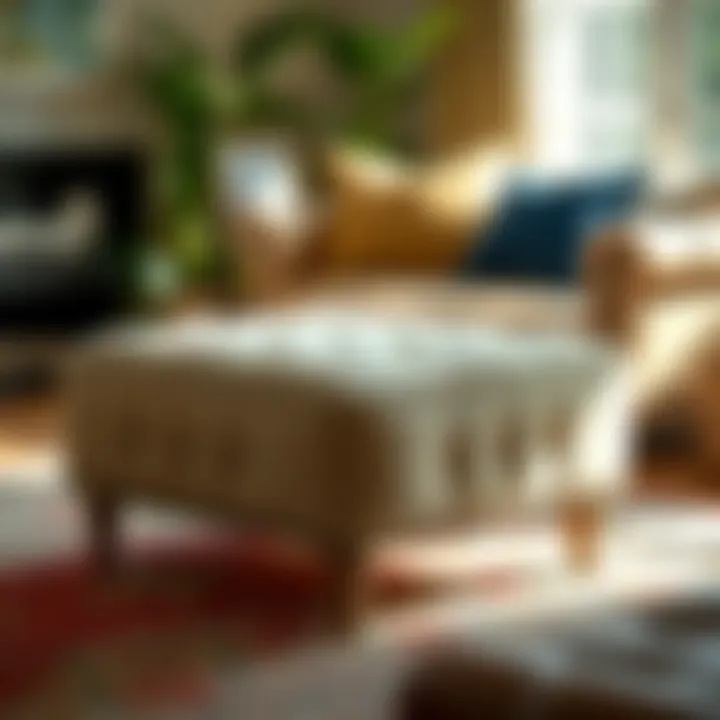
Modern Minimalism
In the realm of modern minimalism, less truly is more. This design aesthetic revolves around simplicity and functionality, focusing on clean lines and uncluttered spaces. A 22-inch ottoman fits effortlessly into this schema, offering both seating and storage without demanding too much visual space. Commonly upholstered in neutral fabrics like light grey or soft beige, these ottomans can blend seamlessly with the surrounding decor.
Key elements that define the minimalistic style include:
- Neutral color palette: Opting for monochromatic shades helps create harmony in the room.
- Simple shapes: Ottomans with geometric forms—like cubes or cylinders—tend to resonate well with a minimalist space.
- Multi-functionality: The ideal modern ottoman shouldn’t just look good; it should also serve a practical purpose, whether for seating, a coffee table substitute, or hidden storage.
By incorporating a 22-inch ottoman in modern minimalism, a space can achieve a sense of balance, offering both form and function.
Classic Elegance
Classic elegance speaks to those who appreciate timeless beauty and craftsmanship. In this style, ornate details and rich fabrics play a pivotal role. A 22-inch ottoman can be the showpiece of a luxurious living room or bedroom, featuring deep colors, plush upholstery, and intricate stitching. These ottomans often come adorned with characteristics such as:
- Rich fabrics: Consider options like velvet, brocade, or high-quality leather—materials that feel good underfoot and invite touch.
- Traditional patterns and prints: Floral prints or damask designs reflect a sense of history and charm.
- Detailed craftsmanship: Hand-stitched seams or decorative nailhead accents can elevate the appearance, giving the ottoman a compelling story.
Incorporating a 22-inch ottoman in a classic elegant style allows it to stand out, serving as a focal point that invites conversation while maintaining the sophistication of the space.
Bohemian Flair
Bohemian style, characterized by a mélange of colors, patterns, and textures, allows for a more eclectic approach. A 22-inch ottoman fits wonderfully into this style, providing not just comfort but also a canvas for personal expression. Typical aspects of bohemian decor include:
- Vibrant colors: Embrace bright hues or mixed patterns that enliven the room.
- Textured fabrics: Textiles like woven rugs or macrame add depth and warmth to any setting.
- Mix and match: Unlike more formal styles, bohemian design encourages the mixing of various elements—think an ottoman paired with mismatched furniture.
A 22-inch ottoman in a bohemian setting can be a conversation starter, reflecting the owner’s travels or interests while providing a cozy nook to gather around.
"The beauty of design styles lies not just in aesthetic appeal but in the narrative they weave within a space. Each choice tells a story, echoing the homeowner's personality and lifestyle."
Practical Considerations for Ottomans
When it comes to choosing an ottoman, understanding the practical considerations can make all the difference. It's not just about how the piece looks in your living room; it's also about how well it functions within that space. For homeowners, designers, and decorators, considering these practical elements ensures a balance between form and function.
Maintenance and Care Tips
Proper maintenance of ottomans enhances their longevity. Regular care keeps them looking sharp and vastly improves their utility. One simple tip is to vacuum upholstery often. This prevents dirt from settling and can make a significant difference in the appearance of fabric. Conversely, avoid harsh chemicals when cleaning. A spot cleaner compatible with the material is often recommended. Also, remember to rotate your ottoman periodically, especially if it’s subjected to consistently uneven weight or use. It helps to avoid uneven wear and keeps the fabric from developing a worn-out look too soon.
Customizable Features
Customizable features in ottomans can elevate their practicality and appeal, making them adaptable to various uses and esthetics.
Storage Options
A major highlight of storage options in ottomans is their dual functionality. Ottomans with built-in storage are ingeniously useful for stashing away clutter, from magazines to blankets. This not only aids in decluttering your space but also keeps essential items within easy reach. Choosing an ottoman with this feature can marry style and function effortlessly. However, consider the ease of access as it can sometimes be annoying if the storage space is cumbersome to open.
"A well-placed ottoman with storage can act as both decor and a hidden stash for necessities."
Adjustable Heights
The adjustable height feature of some ottomans adds a layer of flexibility to how they fit into a room. Users can modify the height to suit comfort levels or even the intended use—be it as a footrest or a low table. This adaptability appeals to those who prioritize a personalized touch in their spaces. Yet buyers should be cautious of how the mechanism operates; complexity can translate into potential malfunctions over time.
Interchangeable Covers
Interchangeable covers can significantly diversify an ottoman's role in home decor. Homeowners who enjoy changing their décor with seasons will find this attribute particularly beneficial. The versatility allows for quick style updates without investing in new furniture. That said, the challenge lies in storage for the additional covers, as they can take up considerable space.
End
The importance of concluding this article cannot be overstated. A conclusion serves as the proverbial cherry on top, where the journey through the nuances of a 22-inch ottoman culminates in a reflective and insightful dialogue. In this section, we aim to distill the myriad points discussed throughout the article into a concise yet comprehensive recap that highlights the key aspects homeowners, designers, and decorators should consider when selecting and integrating these versatile furniture pieces into their spaces.
Recap of Key Points
In revisiting the main themes of our exploration, several key points emerge:
- Utility Meets Aesthetics: The 22-inch height of ottomans provides not just functional benefits as footrests or additional seating but also contributes to the aesthetic balance within a room.
- Material Matters: With options ranging from fabrics to leather, the choice of material significantly impacts both durability and visual appeal. A well-chosen material can harmonize with existing decor or add an unexpected pop.
- Style Considerations: Whether leaning towards modern minimalism or classic elegance, the styles of ottomans can cater to a broad spectrum of tastes and design concepts. Each style brings its own flavor to a space, offering endless customization possibilities.
- Integration Techniques: Thoughtful placement, whether as a focal point or a subtle complement, can enhance the functionality of an ottoman, making it a highly versatile asset in any home.
- Maintaining Longevity: Regular care and maintenance ensure that these furniture pieces remain both attractive and functional, extending their lifespan within your home environment.
"A well-integrated ottoman doesn’t just complement a room; it elevates the entire space."
Each of these points collectively underscores how a properly selected 22-inch ottoman can dramatically alter the dynamic of your home.
Final Thoughts on Integration
As we tie our analysis together, it's crucial to think about how these ottomans can be seamlessly threaded into any room's design fabric. Given their versatility, the integration of a 22-inch ottoman isn’t merely a matter of placement; it’s about creating harmony and purpose within your space.
Consider this: an ottoman can function as more than just a footrest. In smaller rooms, it can serve as a coffee table substitute, thereby maximizing utility without compromising style. In larger spaces, strategically placed ottomans can create cozy corners or communal zones, inviting guests to linger.
When deciding where and how to integrate an ottoman, think about the flow of space and the interactions you envision. The choice of color, material, and style can either blend seamlessly into the backdrop or be a standout centerpiece that breathes life into the room’s aesthetics.
In essence, the integration isn’t just about finding a place for an ottoman; it’s about enriching the overall life of your interior. By understanding the role of the 22-inch height in furniture dynamics, you equip yourself with the knowledge to make informed decisions that enhance both function and style in your home.